Featured Research
See All →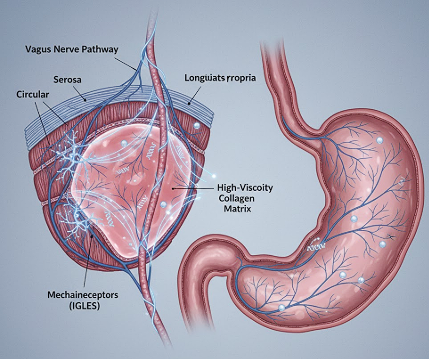
The Gastric Signaling Paradigm: Why Mechanical Satiety May Be the New Frontier of Weight Management
Current research in neuro-gastroenterology reveals that satiety is triggered primarily by physical displacement in the stomach lining — not caloric density. We explore how high-viscosity collagen matrices interact with mechanoreceptors and what the data shows.

Cholecystokinin and Appetite: How a Single Gut Hormone Could Change Everything We Know About Hunger
CCK release is triggered by gastric distension and may act as a powerful appetite-modulating signal. Peer-reviewed data shows gelatin consumption sustains CCK levels significantly longer than water alone.
Latest Articles

Hydrolyzed Collagen vs. Standard Gelatin: Why Molecular Weight Matters for Absorption
Not all collagen products are created equal. Research indicates that peptides in the 2,000–5,000 Dalton range may offer superior bioavailability compared to intact collagen chains.
Read Article
The 20-Minute Pre-Meal Window: Timing Your Protein Intake for Optimal Satiety Signaling
Clinical observations suggest that consuming collagen peptides 15–20 minutes before a meal may enhance gastric mechanoreceptor activation and extend the CCK release curve.
Read Article
Gelatin Found to Be 40% More Satiating Than Casein: What a 2009 PubMed Study Reveals
We break down the Hochstenbach-Waelen et al. study that compared the satiating effects of gelatin against casein and soy protein in controlled conditions.
Read Article
Dietary Viscosity and Appetite Control: A Systematic Review of the Evidence
Higher-viscosity meals slow gastric emptying and extend satiety signaling. We examine the 2011 Wanders et al. review and its implications for collagen-based protocols.
Read Article
Beyond Calorie Counting: Why Your Body's Stretch Receptors May Be More Important Than Your Food Diary
Mechanoreceptors in the stomach wall respond to volume, not calories. This paradigm shift in satiety research could redefine how we approach daily nutrition.
Read Article
GMP Certification Explained: Why Manufacturing Standards Matter When Choosing a Collagen Supplement
Not every collagen powder on Amazon meets the same production standards. We explain what GMP certification means and why it should influence your purchasing decisions.
Read ArticleMost Read This Month

The Compliance Problem: Why 87% of People Abandon DIY Gelatin Protocols Within 3 Weeks
Preparation time, taste issues, and sourcing the wrong collagen type are the most common reasons. We analyzed community forums and identified the pattern.

What Gastroenterologists Want You to Know About Collagen Supplements and Digestive Health
We reviewed published commentary from GI specialists on the safety and potential applications of hydrolyzed collagen as a dietary supplement.

Bovine vs. Marine Collagen: A Head-to-Head Comparison of Bioavailability and Peptide Profiles
Both sources offer hydrolyzed peptides, but their amino acid compositions differ in ways that may affect absorption rates and biological activity.

Gastric pH and Supplement Stability: How Stomach Acid Affects What You Actually Absorb
The stomach's acidic environment (pH 1.5–3.5) can degrade many supplement formats before nutrients reach the small intestine. Formulation matters.